



This interview took place on a historic day: the FDA removed the black box warning for HRT (hormone replacement therapy) after 20 years. My guest, Dr. Mariza Snyder, author of The Perimenopause Revolution, explains why this matters and why women have been suffering needlessly for decades while doctors dismissed their symptoms as “just aging” or “just stress.”
Perimenopause is the 4 to 10-year transition where hormones wildly fluctuate before menopause, and Dr. Snyder calls it “the window of vulnerability.” She uses a powerful metaphor: imagine estrogen as your brain’s master CEO who shows up like clockwork from 9 AM to 6 PM for 30 years.
Then, suddenly, without warning, it shows up at 2 PM one day and leaves at 11 PM, then shows up at 6 AM the next day and leaves at 11 AM. Your brain scrambles trying to regulate energy, neurotransmitters, sleep, mood, and cravings.
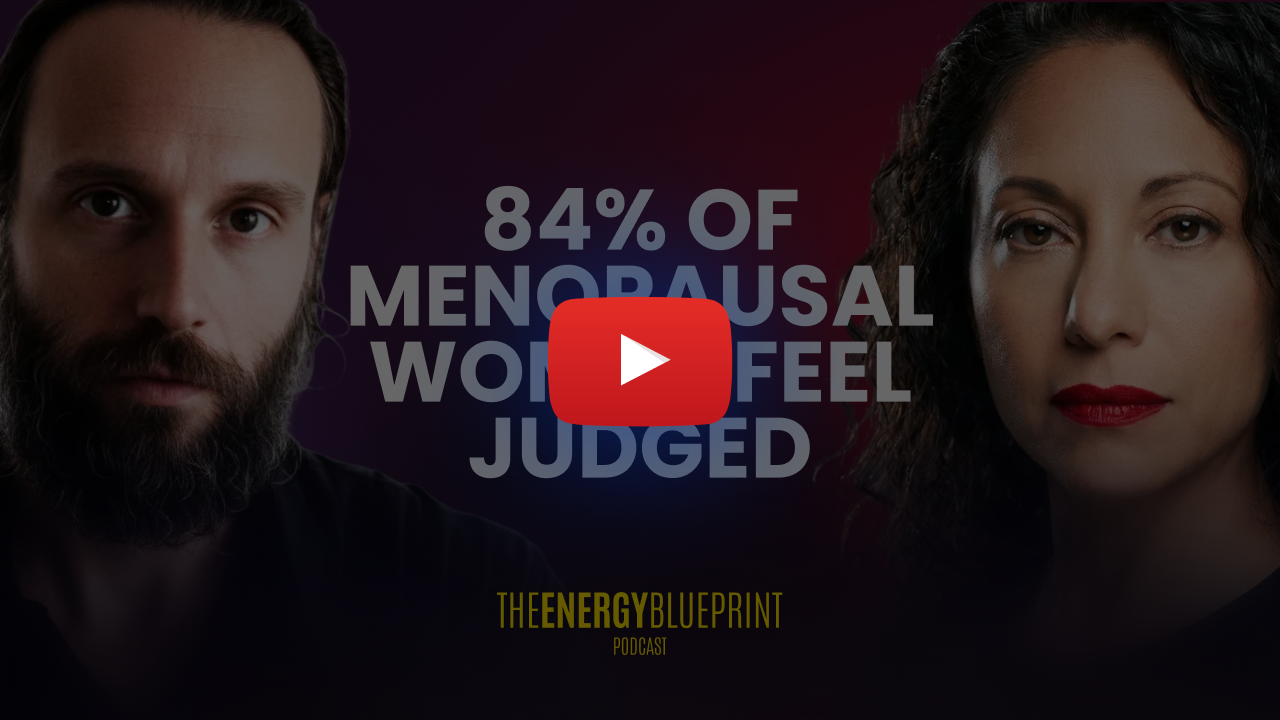
The most compelling insight of our conversation is a Mayo Clinic study that found 84% of menopausal women don’t seek care. Why? Because they feel judged in the doctor’s office.
Dr. Snyder wrote her book as the roadmap she desperately needed when she started her own perimenopause journey, connecting symptoms to future health outcomes and providing practical solutions beyond just “you’re getting older.”
Table of Contents
In this podcast, Dr. Mariza and I discuss:
- A big day for women’s health! The FDA removed the black box warning on HRT today after 20 years, making history as women demand to stop suffering needlessly from menopause symptoms
- Perimenopause is a 4-10-year transition where hormones wildly fluctuate—most women experience it for about 6 years on average, but some women are in it for over a decade
- The Women’s Health Initiative study scare was based on 4 vs 5 cases of breast cancer per 1,000 women, a 25% relative risk that was actually less than 1% absolute risk, causing 44% of women to be pulled off HRT overnight
- The risks of synthetic progestin, not estrogen, and why we should be careful giving hormones to older women who have never used them before
- New research shows starting HRT in perimenopause prevents chronic conditions…waiting until menopause is like waiting until thyroid hormones “bottom out” before treating hypothyroidism
- The recurrent infection behind why most women end up in assisted living, plus 50% of women will have an osteoporotic fracture…both of which are preventable with estrogen therapy
- 84% of menopausal women don’t seek care, according to the Mayo Clinic, and Dr. Mariza discusses why
- Women spend 25% more of their lives in debilitating health than men—hormone optimization is crucial for women’s quality of life after 50
- Dr. Mariza’s book provides a complete roadmap from blood sugar to circadian rhythm, including a 5-week plan with recipes, workout videos, symptom trackers, and complete lab guides
Listen or download on iTunes

Listen outside iTunes
Transcript
Ari Whitten: Mariza, thank you so much for coming back on the show. It’s such a pleasure to have you.
Mariza Snyder: Oh, I’m so grateful to get to be here.
Ari: The last time I saw you, we were dropping off our kids at farm camp just a few miles away from our houses. We live not far from each other. We hang out every now and then. Last couple years, not so much because you and I have both been in the midst of book-writing journeys, as we were just talking about.
Mariza: Parenting.
Ari: Parenting, yes.
Mariza: Yes/and.
[laughter]
Ari: One of us has finished the book that we were working on.
Mariza: That would be me, Ari.
Ari: That would be you.
Mariza: I’m the one who finished my book.
Ari: I’m over here still struggling. You finished your book.
Mariza: I get an A+.
Ari: You do. The book you’ve been working on is, of course, The Perimenopause Revolution. Congratulations. I know that it just launched, what, a few weeks ago?
Mariza: October 21st.
Ari: How is it doing so far?
Mariza: Really good. The feedback has been really amazing. The thing that comes back to me in terms of feedback is how practical it is. That was my goal. It was the book I desperately needed when I started my perimenopause journey and realized that there wasn’t a full roadmap that really helped me to understand what was going on with my body fully. I knew the symptoms. I was living that life and those symptoms. I wanted to be able to connect the dots between what was going on.
More importantly, my symptoms and my future health outcomes. I was like, what does this mean for me down the road? That’s how I wrote this book. I wrote this book from the perspective of a woman in her 40s struggling, literally on the struggle bus. What would she desperately need to mitigate the symptoms and to move through this transition with as much power and resilience as she could muster?
Ari: That was a perfect, preemptive answer to my first question that I had for you, which was what prompted you to write this book. We’re so in sync that you’re already answering questions before I even ask them.
Mariza: I feel like this has been our relationship for many years.
Ari: All right. I want to step back to first principles, just the most basic of basics here. First of all, let’s just define for the listener what menopause actually is. What perimenopause is, because these words get thrown around, but they are ultimately scientific words with specific definitions. I think we should just be clear for everybody what exactly we’re talking about here.
HRT safety & new evidence
Mariza: Yes. Let’s start with menopause. Menopause is having a moment. Literally today. I don’t know if you saw this yet, Ari, but the FDA is removing the black box warning on HRT. On estrogen therapy for women after 20 years.
Ari: I did see a scientist a couple months ago. I remember them discussing that they were-
Mariza: They were there. It’s a big panel.
Ari: -doing it. They actually made the decision now?
Mariza: Today. Today was the day. It’s a very unprecedented day that we’re doing this. History is being made. Women are tired of suffering needlessly.
Ari: Yes. I wanted to time our interview on this day specifically for that reason. It was all intentional that we scheduled this appointment last week for this day because I knew it was going to happen.
Mariza: Yes. Let’s talk about menopause. Mind you, HRT is one of the many tools in the toolbox when it comes to supporting women in perimenopause, menopause, and beyond. The way that we define menopause, which is the senescence of our ovaries and our ovarian germ cells, really, it’s when we really don’t have any more eggs. That’s what menopause technically is defined as. It’s where we have not had enough eggs to have a menstrual cycle for 12 consecutive months. Literally, that 12th month where you haven’t cycled, that day and time is menopause. Everything after that is technically post-menopause or menopause, however you want to define it.
Now, natural menopause can happen anywhere between 45 and 55 years old. Early menopause between 40 and 45, and premature menopause before the age of 40. Now, premature menopause can be for a number of reasons, like a surgery or radiation, and chemotherapy, or even primary ovarian insufficiency. There’s a number of reasons. 50% of the time, we have no idea why a woman goes into premature menopause.
The reason why I’m sharing that is that we know that if we’re losing hormones earlier than even natural menopause, and I would even argue that at any point we’re losing hormones, it is leading to an acceleration of aging, but that we accelerate in premature aging. Now, perimenopause is separate from that. Perimenopause is the erratic fluctuation of hormones due to the miscommunication. Have you ever played telephone with your kids?
Ari: Yes, of course.
Mariza: How did that go?
Ari: Amazing.
Mariza: It’s amazing. I love what they come up with, but it’s definitely not what was said. That’s what’s basically happening between the brain and the ovaries. There’s a miscommunication between those pituitary hormones, luteinizing hormone, follicular stimulating hormone, and then what’s going on with the ovaries and how it relates that information to progesterone and estrogen.
As a result, we have this 4 to 10-plus-year transition. I’m saying 10-plus years. Some women can be in perimenopause for more than 10 years, where hormones are wildly fluctuating and ultimately declining as we wind down that egg supply. It’s that window of vulnerability that is perimenopause because so much is up in the air due to these hormones wildly fluctuating.
Ari: What is that window of time? How long does it last?
Mariza: I would say on average, most women are in it for about six years. Some of us are in it even longer. I know women who are in it for easy a decade.
Ari: This perimenopause period is as you’re moving into menopause, and the years when menopause is actually happening, or as menopause, do we define it only menopause happened at a certain point, you ran out of eggs, so it’s a very well-defined point in time, or it’s a period of several years?
Mariza: I know we were talking about feminism and all those types of things. You could even argue, just because it’s you and me having this conversation.
Ari: I’m afraid of what’s coming next here.
Mariza: The way that we define menopause is a very patriarchal definition. The fact that women not having a menstrual cycle for 12 consecutive months, that stamp, that is menopause. It really is the great menopause myth in a lot of ways because what’s being argued is that women, as estrogen and progesterone have been declining for years, that there isn’t really one moment in time, per se. That a lot of women, their muscle loss, their bone loss, their increase in insulin resistance, their cardiometabolic health, that’s all been shifting and changing. Well before that defining moment of menopause.
The reason why we defined menopause is like, oh, we have these menopause hormone replacement therapy drugs, menopause drugs. Technically, right now, they’re called menopause replacement is really what it’s called, is that, well, we know that we can prescribe HRT to a woman who we definitely know is in menopause. That’s how we defined it. However, the window of vulnerability, I would say for women, is often in the years leading into menopause. That’s where we still have hormones, but often not very much of them as we lead into menopause.
If a woman’s having hot flashes and night sweats before technically menopause, is it okay that we still treat her, or do we have to wait until she gets to menopause? That’s why that’s so important that we define peri between peri and menopause, but to also understand that it’s one big through line and it’s one big continuum. A woman who’s 46 years old doesn’t care necessarily if she’s in peri or menopause. If she can’t seem to get to sleep at night because she keeps waking up with crazy hot flashes and night sweats, and struggling to get through her day. That’s how we’re defining.
Mariza: Very interesting. Because there isn’t this clear distinction between, let’s say, what’s happening hormonally on average in your 40s versus, let’s say, your early 50s. It’s just this general decline that happens over a prolonged period of time. Is the advice that you’re giving unique to perimenopause, or does it also apply to women in menopause?
Mariza: It 100% translates to women in menopause.
Ari: Just out of curiosity, why the focus around the term perimenopause?
Mariza: Collective outrage.
Ari: Okay, explain. [laughs]
Mariza: Because we only fully defined treatment for women in menopause for not just decades, for quite a long time, for generations. Women who were in perimenopause, because we weren’t really able to measure it or know it’s a moving target in its own right, we often blamed those symptoms and what women were going through as simply aging or it’s stress or this is just the way it is. I think due to the fact that women have been struggling during this transition for so long, collectively, they have demanded more visibility around this area, more validation, a higher standard of care, and really just to be heard.
When we finally started looking more at the research and science, we were like, “Oh, actually, it wasn’t that you’re just crazy and you’re just getting older, these hormones not only are declining, but they’re declining erratically without permission.” An example of this is we think about estrogen in the woman’s brain as being the master CEO. Think about estrogen for 25 to 30-plus years, Ari, has been rhythmically cycling and consistently showing up to work in the brain from 9:00 AM to 6:00 PM every single day. We’re talking clockwork. This is a Virgo in terms of how she shows up.
One day, out of the blue, doesn’t Slack you, doesn’t email you, doesn’t text you, no announcement. There’s no one day where perimenopause is like, “I’m here,” or there’s no one lab test. Estrogen simply doesn’t show up until two o’clock in the afternoon, and then goes home at eleven o’clock that night. The next day, shows up at 6:00 AM, goes home at 11:00 AM. It’s this inconsistency of a really powerful and potent regulator not showing up to binder receptor sites in that rhythmic matter.
The brain, as this example, is scrambling and trying to figure out what it’s going to do in terms of energy metabolism, in terms of neurotransmitters being bound to and activated, in terms of neurogenesis being regulated. All across the board, the thermoregulation centers of the brain, the sleep centers of the brain, the motivational centers of the brain, craving centers, all of it begins to just get erratic and crazy.
Ari: I want to get really geeky here for a second. As you were very much in line with what you were just talking about there with estrogen, I want to get detailed about the specific functions of estrogen and progesterone. Maybe we can start with what is happening specifically, hormonally, between a young woman and a woman going through perimenopause or menopause. What are the those hormones actually doing? What are their key functions? As a result of their decline, what are the key physiological changes or symptoms that result from that?
Mariza: I love this question so much. I’m actually going to take us back to puberty, the first big hormone shift. We know that puberty, pregnancy–
Ari: These were bad years for me, by the way, just so you know. I might be a little triggered.
Mariza: Good to know. I’m gearing up.
Ari: I’ll try not to tear up as you do your explanation, but go ahead.
Mariza: Puberty, pregnancy and postpartum, and perimenopause are the three major neuroendocrine transitions that a woman goes through. Now, some of us elect out or we’re not able to have children, but most of us, an inevitability of puberty and perimenopause, known as second puberty or cougar puberty to some people on TikTok, those are big neuroendocrine transitions. They are equally as destabilizing as they are transformative. Let’s start at puberty. Our reproductive hormones come online. This takes about four to six years. If you’re wondering about your daughter, just a heads up.
I know she’s a long ways away, but it is a four-to-six-plus-year transition as her reproductive system is coming online. By the time we’re 20, we’re pretty much rocking and rolling. We have two different distinct phases in the ovulatory cycle because remember, ovulation is the main freaking event. It’s not your period. I don’t know why that was the focus, but it’s ovulation. The first part of that cycle, the follicular phase, is all about priming your ovaries to release that egg. That happens where we release follicular stimulating hormone in the beginning.
Estrogen goes up. She peaks at day 10, day 11, day 12. we get that luteinizing hormone surge. Tada, we pop that egg. Let’s just say a 28-day cycle on day 14. Not every woman runs this cycle. Most of us don’t. The days can vary. When we have that egg release, there’s a corpus luteum. It’s like a temporary endocrine structure on the back end of the release of that egg. That is what’s going to crank progesterone on the other side. The first phase of the cycle is just priming us up to release that egg and to prime up for conception. Women are often, this is their time where they feel most alive, more sensual, motivated, confident.
They’re out and about. That’s because evolutionary and biologically, conception is the name of the game. Whether you want to or not, your body is priming for it every single month. on the back end, in the luteal phase, which is another two weeks, the body’s like, did we get pregnant? Because we’re going to hunker down and we’re going to drive a lot of metabolic energy towards the possibility of conception and in pregnancy. Progesterone has its own rise.
Estrogen’s there too, not as big as a rise. Progesterone is going to be 100 times more estrogen. If you don’t get pregnant, the body figures that out halfway through the luteal phase, and all the hormones begin to drop. That’s where that classic late luteal PMS symptoms arise, is when those hormones are declining. We’re heading back into day one of menstruation. That’s the cycle. That runs normally. If there aren’t metabolic issues or things like polycystic ovarian syndrome, we’re good to go. Until we’re about our mid-30s. We enter our late reproductive stage. We’re not calling it geriatric pregnancy anymore. We’ve upgraded to late reproductive stage.
Ari: Was it really called geriatric pregnancy?
Mariza: Yes, up until five years ago.
Ari: Wow.
Mariza: You know a lot of women who’ve had children after 35 years old, Ari, including myself. Basically, at this point, we have about 10,000 eggs left, give or take, per person. We had about 300,000 to 500,000 when we started puberty. We’re cycling through those eggs every single month. Around 35 years old, we start to have anovulatory cycles. Again, different for every single woman. That means a cycle without ovulation, or even ovulation, isn’t as robust as it used to be. On the backend, that progesterone, that progestation hormone, she’s just not as robust. It’s not showing up as predominantly as it used to. This is where the symptoms come in.
Due to that impact, due to that– I would say progesterone’s more of a precipitous decline than an erratic decline. Eventually, it becomes erratic, too. We start to notice more PMS symptoms in the late luteal phase of our cycle. Women will begin to notice sleep issues in that part of their cycle, more irritability, more mood swings, cognitive changes, more cravings. That’s usually what a lot of women will experience in very late reproductive stage as they start to move into perimenopause.
As these eggs are beginning to continue to decline, the ovaries know it. The brain is starting to figure it out. That’s when the hormone communication becomes very erratic. One day, progesterone can be up. The next day, it’s completely down, and the same with estrogen. Perimenopause is broken into two phases, which I can also go into more detail about.
Ari: Please.
Mariza: Late reproductive stage, again, progesterone’s beginning to wane. Not significantly. Maybe women aren’t even seeing it on the lab test, but they’re feeling something shift. we move into perimenopause. Again, if perimenopause is 4 to 10-plus years leading into menopause, and natural menopause is anywhere between 45 and 55 years old, perimenopause can safely start as early as our mid-30s. On average, in my clinical practice, most women come to me at 42 or 43 years old because they feel like they fell off a cliff. It’s often the brain-related symptoms that really mess with women. Women, we’re very capable.
You are not going crazy - your symptoms might be perimenopause
We are the CEOs of many departments in our lives. There’s something about you knowing you’re capable of doing something, and then you having only so much bandwidth to do it. I would say, an identity crisis more than anything. Women will come to me and think that they’re going through early dementia because they can’t remember what they’re saying. They don’t know why they walked in a room. They don’t have the same mental energy and they’re executive functioning. Their ability to handle multiple tabs at a very high level, begins to falter. They’re also ragey. They’re raging at their husbands.
They’re raging at their kids. They are having mood swings. They’re having sleep issues, weight resistance. All of this is happening often in early perimenopause. What distinguishes early perimenopause from late is early, you’re still having a cycle pretty regularly. Maybe it’s less days, or maybe it’s a little bit irregular, but for the most part, it’s still like clockwork. That’s why women were being dismissed. They would go to their doctors and say, “Hey, something isn’t right. I don’t feel like myself.” A doctor would say, “Well, you’re too young because you’re cycling.” That’s it. we have late perimenopause–
Ari: It was this very binary, very black and white thinking. You’re either in menopause or you’re not.
Mariza: Exactly, or you’re getting really close. The way that we knew you were really close was crime scene periods. It’s when you’re skipping a cycle more than 60 days. You would not have a cycle, and then you would have a crime scene period. Again, send me a sign, make it impossible for me to miss. When you start to miss your cycles many months in a row, that means you’re one to four years away from menopause. That’s what we really defined as perimenopause back in the day, but technically, that’s late perimenopause. I would call that the eye of the storm.
Ari: Got it.
Mariza: We didn’t even get into all the physiological processes that all these hormones are involved in. That’s just what’s going on with the cycle.
Ari: Estrogen and progesterone being the two big players. Are there any specific changes in testosterone that happened during menopause, too? I know that there are some misunderstandings and myths around testosterone. A lot of people I find don’t even know that women have testosterone. A lot of people don’t know that testosterone is actually more abundant in a woman’s body than estrogen is.
Mariza: Yes, than any reproductive hormone.
Ari: Yes. When I had Dr. Sean Tassone on, maybe a couple years ago, who I know is a mutual friend, he talks about how testosterone deficiency is this very common thing in women that goes untalked about because of just this widespread misconception that testosterone is purely a male hormone and we don’t generally associate it with women. Tell me about the changes that happen in those hormones, and then what specific functions those hormones are having in a woman’s body.
Mariza: Yes, I love this question. Just like you said, testosterone is the most abundantly bioactive hormone in a woman’s body when it comes to the reproductive hormones. I’d like to think of testosterone as a build-you-up hormone. It builds up your confidence. It builds up your cognitive health, your cognitive function. It builds up your motivation. It builds muscle recovery. There’s just so many incredible benefits to testosterone in the body. Very similar to men, we peak with testosterone in our mid to late 20s. It’s basically a precipitous decline all the way. It’s not as erratic as progesterone and estrogen, although it is important in the follicular phase of our cycle.
That’s really where it shows up is in the follicular phase of our cycle. That’s usually that late follicular where estrogen is peaking, so is testosterone. Evolution isn’t making mistakes here. There’s a reason for that. Testosterone will be 50% less than it was during its peak once we hit menopause. It has been declining for quite some time. However, testosterone is a very sensitive hormone like so many of the other ones. We know there’s a lot of things that can mess with testosterone levels in our environment, including toxins and takeout food and ultra-processed foods, not lifting weights or working out, so living a sedentary lifestyle, deficiencies like vitamin D.
A lot of things can play a role in a quicker, precipitous decline of testosterone. My recommendation for any woman is at the age of 33, 35, we should be looking at all of these levels. It’s really important that we have a timeline of your hormone labs so that we know where you were while you were still in your reproductive years as you begin to move through perimenopause and menopause. Yes, very often women’s testosterone levels are significantly lower than they should be, even in their late 30s and early 40s, and that’s absolutely contributing to the symptoms that they’re experiencing because none of these hormones are operating in a silo.
What estrogen really does
Ari: What are the key functions of progesterone and estrogen?
Mariza: Yes. Let’s focus on estrogen, number one. It’s important to note that we’re not talking about just reproductive health. This isn’t just bikini medicine. How we defined bikini medicine for women is that the only way that you and I were different is between the areas between the bikini area. That was how we defined women for a very long time, even after 1993 when it was mandated that we do clinical research on women.
We now know that estrogen and progesterone, these reproductive hormones are whole-body hormones. I focus on the brain for a moment. We know that estrogen is the master regulator of the brain. We also know that estrogen is helping to regulate muscle protein synthesis. It’s regulating bone remodeling. It is regulating insulin. It’s got a really bidirectional relationship with insulin and insulin sensitivity. It’s got a relationship which is bidirectional with the gut microbiome in terms of gut microbiome diversity. It is an immune system modulator.
That’s why a lot of women will get autoimmune conditions, impairing menopause, or a lot of joint pain, migraine pain. It is helping to regulate connective tissue and regenerate connective tissue. On the women’s shows, I’ve been like, what’s this right here on my neck, this thing? It’s because as we lose estrogen, we don’t have the same collagen production that we used to have. You’re noticing wrinkles. You’re noticing hair changes. You’re noticing skin changes across the board. Those are just a few ways in which estrogen is shifting. Hot flashes, night sweats, vasomotor symptoms, sleep issues, mood swings, all of this is due to a decline of estrogen.
Ari: You could just say everything.
Mariza: Basically, everything.
Ari: Quick summary, it does everything.
Mariza: Everything. In cardiometabolic health, as estrogen declines, our vascular walls become more stiff and rigid. We lose nitric oxide production. We start to see these silent shifts that begin to happen. The myth that I really want to dispel today on any show is that we talk about perimenopause being this zone of chaos, but that everything settles out once we get into menopause. I’m going to argue that no, this is a metabolic inflection point. This is a cardiovascular inflection point. There are a lot of silent shifts that we are missing. Some of the biggest bone loss acceleration happen in late perimenopause.
Muscle loss, late perimenopause, we start to see moving towards 5% to 10%. We see more insulin resistance. By the time women are 45, more women than men will be overweight or obese. There’s a metabolic inflection point that I think it’s important for us to point out. I see lipids go out of range. I see blood pressure go into hypertension. We often aren’t looking at these things until menopause because that was always that defining moment. There’s a lot that begins to unravel well before that.
The role of Progesterone
Ari: Very interesting. Go to progesterone. Also everything?
Mariza: No, not. Well, here’s the thing about progesterone is we haven’t studied it enough. What we do know is progesterone is obviously a neurosteroid known as allopregnenolone. It activates the GABA-A receptors. We think about the brake system in terms of anxiety, stress, overwhelm, even helping us to get to sleep so we’re not so wired and tired. Again, this is separate from circadian rhythm disruption and cortisol spillover. Progesterone is also doing its own job. When it stops showing up to the party, it has a profound impact on neuroinflammation.
There’s a lot of research that points to the fact that perimenopause is a neuroinflammatory state. It’s not just estrogen that’s driving that complex situation. Progesterone reduces bloating. It reduces water retention. It is really involved particularly in metabolic health because when we think about progestation, we need really great metabolic health to maintain that pregnancy in the second half of our cycle. Those are some of the things we know. I always think about progesterone as soothing things out. Soothing out inflammation, soothing out sleep issues, soothing out mood. Those are some of the big players for progesterone.
Ari: Are you familiar with Michael Platt and his ideas around adrenaline dominance?
Mariza: I read about it, but not in full detail.
Ari: I’ve had him on the podcast. One of the things I remember remarking about is that he isn’t really connected to lots of other thinkers. He’s just doing his own thing as a clinician. He basically formulated this whole idea around what he calls adrenaline dominance. He sees it as a dominant factor in health and disease. One of his key solutions for this problem of adrenaline dominance is progesterone cream. It’s his go-to. I don’t want to misrepresent. I don’t know if it’s the go-to thing, but it’s certainly at least one big factor of his solution for what he calls adrenaline dominance.
Mariza: When I read the research, it sounded a lot similar to hypothalamic-pituitary axis dysfunction. We’re just in survival mode a lot, which is every midlife woman I’ve ever met, really.
Ari: I think, to a large extent, probably different words of saying the same thing. You could say sympathetic dominance or autonomic nervous system imbalance. He’s the only person I see out there widely prescribing progesterone cream as a solution for essentially being wired, being sympathetically dominant.
Mariza: It’s interesting because it is being prescribed specifically for what you’re saying, but it’s being prescribed for sleep issues, stress issues, anxiety. We’re seeing that off-label for progesterone, that that’s what it’s being recommended. The same issues are driving that problem. What’s interesting about the chicken or the egg, and I’m really interested in– We have more research to back this up. I’m going to be intrigued to see what it says.
Sleep, stress, and hormone disruption
Ari: The answer is proto-chicken, so we’re clear.
Mariza: [laughs] I love that. When we go into perimenopause, a lot of what women will describe is low stress tolerance. They don’t have the same stress tolerance. We’re really attributing to the fact that it is low progesterone, like that these hormones are a protective shield. The stress has always been there. I would say that this is a messy middle. I would say women are holding more in this particular time in their lives than ever before because many of us are in the sandwich generation where we’re taking care of our parents, things are going on with them. We’ve got younger kids.
I was just at a party with some of the Coastal Roots Farm parents and some other parents from our school. It was all preschoolers. It was all three, four, five-year-olds. I think the oldest kid was six. It was a bunch of 40-something-year-old women. It was all 40-something-year-old moms. There’s a lot going on. It’s almost funny that all of this is happening all at once. We’re losing hormones and our stress levels are out of control. This stress tolerance, it becomes this crazy cascade that we don’t seem to have a solution for.
Ari: As far as identifying if you’re in perimenopause, would you recommend for someone to do this based on their period frequency, going several months without having a period, or actually doing a test and being below certain cutoffs on hormone values? If a woman is still having cycles, I know that testing for hormones can be a bit complex and you have to go on a particular day of the month, but if you’re having irregular periods, how do you even do that? What’s the process for identifying this?
Mariza: The gold standard for basically identifying perimenopause in women, the clinical way to do that is through symptoms. There are three ways to identify if you’re in perimenopause. First is age. One of the best ways even is to ask your mom, when did she go into menopause? Does she even know if she went into perimenopause? Most likely not because we just gaslit her and told her she’s crazy. It’s just how it is. Most likely, she may know when she went into menopause.
You can reverse engineer from there. Age. Next is symptoms and also symptoms along your menstrual cycle. Women in perimenopause will have some level of menstrual cycle changes, whether it’s maybe a 26-day cycle instead of a 28-day cycle, or they’re spotting before their period. Those irregular changes are worth noting. Again, the more of a timeline you have about that monthly report card, the more you know your normals and you see when your normals begin to shift. Symptoms.
Symptoms, often in the beginning, symptoms are cyclical. For one part of the month, you’re great, or even for two months in a row, you’re great, and then two months, you’re not. Tracking those symptoms along your cycle is going to be really important. Again, if a woman’s 44 years old, she only has a 25-day cycle, it used to be 28 days, and she is biting off everyone’s head, and she can’t sleep, and she has low energy, I would consider her perimenopausal.
Real solutions that help
Ari: When you’re perimenopausal or menopausal, let’s transition to solutions. What are the different prongs of your strategy as far as what a woman in this stage of her life should start to do in order to improve her hormonal health?
Mariza: Yes. I love this. Number one is to get that data on yourself. Track your menstrual cycle. Figure out what are some of the biggest symptoms that you want support with because a part of this is going to be you advocating for yourself, you having a team that supports you. That’s going to be number one. Next, I do recommend having biomarkers. I think that having a baseline of what is going on, even if it’s a DEXA scan or it’s those traditional biomarkers, it can tell us something about what is going on with your body. Especially if you don’t feel good. I go through that in the book.
I have an extensive lab sheet where, if women want to understand if they’re being told things are normal, but they don’t feel normal, they can go and get that resource to look in a more functional perspective. Also, really assessing what is your mood, what is your sleep, what is your energy levels? Are you able to move in a way that feels good to you? Tracking all of that as well can give us so much information. I don’t know if this is something you agree with, but I do love the fact that we’re moving into an age of bio-observability. Mainly because so often women have been told not to listen to their bodies and to just push through at all costs.
Often, I find that my patients really don’t know. We can easily dismiss ourselves. We can gaslight ourselves. We can talk ourselves out of getting care because there’s more important things to be doing. When I look at my Whoop and it says that my HRV took a major hit or that my resting heart rate isn’t where it needs to be today, that is meaningful to me. I’m always taking all these things into consideration so that I can make real-time changes to how I can feel and show up for myself and my family. That would be number one. Tracking your data, getting information about yourself.
Ari: What’s number two?
Mariza: Number two. I would say that we want to focus on– you’d be so surprised at this answer, is your cellular energy.
Ari: Whoa.
Mariza: What?
[laughter]
You’ve got to be kidding. No.
Ari: Do you know anybody who talks about that?
Mariza: Nobody. An energy blueprint? I have no idea. Obviously, your cellular energy is at the epicenter of everything. Whether you want to argue that it’s merely age, I want to say that it’s a yes/and. Two things can be true. Yes, we’re aging and hormones are declining. As a result, the result is the same. We’re losing our energy capacity. It’s showing up in the way that we are losing our muscle. Our brain isn’t firing the way that it used to. Ultimately, we are inching towards more chronic conditions.
How do we shore that up? That’s literally what The Perimenopause Revolution book is about. I am interested in mitigating all the nuisance symptoms that women are dealing with, like frozen shoulder and hot flashes and night sweats. What I’m most concerned about is protecting a woman’s future health outcomes. The big through line of this book is, what is the state of your metabolic health? What is the state of your cellular energy? What can we do to get that back?
Ari: What are some of the key factors or key recommendations when it comes to cellular energy?
Mariza: One of these other recommendations, I have a feeling you haven’t heard of. That is circadian rhythm optimization.
Ari: I get a little sensitive on this topic because I was talking about-
Mariza: You were the pioneer.
Ari: -circadian rhythm, a long time ago, before it became trendy, and when everybody would cock their head to the side and sort of like, “Circadian rhythm? What the hell is that about?” Now everybody knows about it. I can’t use it as my unique schtick anymore. I’m a little upset about that.
Mariza: I know. I remember having these conversations with you many years ago. I remember interviewing you. I remember you really laying out the research and science. I was like, that clicks. That makes so much sense. I remember beginning to starting to implement a lot of the circadian rhythm recommendations that you had, especially around the light cycles. I go into that, particularly as it connects to women and connect in with not only food timing, but obviously protecting their sleep like it’s a million-dollar meeting. I talk a lot about it in the book, but more so from the lens of, yes, cellular energy, blood sugar regulation.
I think a lot of us don’t realize that we have deregulated blood sugar and blood sugar variability and that it’s driving more cravings, more hunger, the blame-shame spiral of overeating. I go into balancing blood sugar in the book, building a metabolically healthy plate, which focuses on micronutrients and antioxidants, omega-3 fatty acids, fiber, and probiotic-rich foods. I really wanted to think of it from the standpoint of how do we reduce inflammation on a cellular level? How do we protect the gut microbiome? How do we shore up a better metabolic and mitochondrial health?
There’s a whole section on literally how do we create this plate from a very practical standpoint. With a meal plan and recipes to back up, I feel like it’s a lot of the stuff that we– I just copied all of your stuff. No, I’m kidding. I’m kidding. No, but I feel like we’ve had these conversations over the years about what is going to shore up good metabolic health. From the standpoint of as your body’s changing, how do we get in front of it? Movement, community. Probably the biggest predictor of our longevity and to mitigate premature aging is connection. It’s spending time with people, especially women in midlife where it’s very lonely.
When you’re dealing with a lot of these symptoms, you think that not only do you feel blamed and you feel judged and criticized. There was a huge study from the Mayo Clinic that just came out around women. I think it was 84% of women in menopause don’t seek out care. One of the biggest reasons is, one, they weren’t educated about it. This is a huge knowledge gap. Number two is that they always feel judged in the doctor’s office.
They don’t even feel good about going in and talking about their symptoms because they know they’re just going to get blamed for what’s going on with them. That is not okay because women are not broken. They’re just going through a insane profound hormone shift that requires compassion and a new level of support. Community is so important here. I talk about HRT as well as an optimizer tool when you are a healthy host for hormones. The other part is mental health. Again, that kind of what you were talking about earlier, the HPA axis dysfunction and how that becomes more predominant in perimenopause and what we can do about it.
Ari: What was the third factor?
Mariza: Are you challenging my perimenopausal brain right now? [chuckles]
Ari: I am, yes.
Mariza: Third factor, I think, was building a metabolically healthy plate.
How exogenous hormones and hormone replacement therapy fits into perimenopause
Ari: Okay, got it. There’s these three key factors, and where do exogenous hormones and hormone replacement fit into this story? I’d be interested to see how you lay out the magnitude of importance of the different factors for a woman in perimenopause or menopause. What is the level of importance? Maybe we’ll start with this basic question. Do you think that all or most women going through menopause should be on replacement hormones?
Mariza: I love this question. I would say that I believe, and based on the research that I’ve looked into, that women deserve all the tools in the toolbox. I just think it all should be available to them. Working with your doctor, looking at your labs, looking at your markers in a meaningful way, and based on your symptoms, on your health history, on your family history, I think all of that needs to be taken into consideration.
That being said, I’ve got an estrogen patch on. I’m taking my oral micronized progesterone tonight [chuckles] because they’ve been big players. This is from the standpoint of I am moving my body meaningfully every single day. I train in the gym three to four times a week. I clock 12,000 steps a day. Movement to me is one of the biggest, most predominant recommendations. How do we become more physically active?
Let’s say you’re doing all the things. You’re checking all the boxes. You are optimizing sleep. You have 88% sleep consistency. You are going to bed at the same time, you’re waking up at the same time, you’re getting deep sleep throughout the night. You’re doing all the things. You’re eating healthy, you’re keeping your blood sugar in check, and you still want to chop your family’s heads off? Maybe we should look into some progesterone. That would be the thing.
[laughter]
Ari: Having said appreciating the individual context aspect of things that you were just explaining there, let’s talk about just the body of evidence. What does the body of evidence suggest about the value, the health benefits or health detriments? Obviously, today is a momentous day in that regard of hormone replacement therapy. I’ve had Dr. Christiane Northrup on the podcast before a couple times, and I’ve had, I think, if I remember his name, Dr. Mache Seibel, who’s also been in this field for many, many decades, Dr. Shawn Tassone, and others. It’s been a few years since I did a discussion on this, but from what I recall, there was some of this research that came out in the early 2000s.
Mariza: Yes, the Women’s Health Initiative [crosstalk].
Ari: Yes, exactly. Talk about that and the attitudes towards hormone replacement therapy that came out of that.
Mariza: I’d like to rewind a little bit, and I talked about the history of HRT. It’s more of a summary because I know Hay House is my publishing and your publisher, too. They’re like, “Let’s tighten this up.” I went into more detail in my manuscript, but it got cut down a little bit. A summarized version of this is, basically, in the 1940s and ’50s, we discovered hormone replacement therapy, particularly for menopause symptoms. By the time we got to 1996, it was the most prescribed medication for women on the market in the United States.
At the time, it was synthetic hormones, so conjugated equine estrogen and progestins, which is a synthetic progesterone, not a bioidentical progesterone. They decided to do this big landmark study called the Women’s Health Initiative. It started in 1996, and they had two different arms. It was an estrogen-only arm. This was with women without a uterus and an estrogen and a progestin arm, MPA. That was with women with a uterus, because at the time, it was believed that progesterone just protected the uterus, that it didn’t do anything else.
Ari: Oh, geez.
Mariza: We had that because we wanted to make sure there wasn’t any endometrial issues due to unopposed estrogen being prescribed to women. In 2002, four years into the study, the estrogen-only arm stopped. The headlines were blaring and blaring, and basically, estrogen caused breast cancer was the claim. Then the other arm stopped two years later. Twenty years later, when we look at that in a retrospective study, there’s a lot of things that we learned about hormone replacement therapy. Note that they claimed it was a 25% relative risk. Out of 1,000 women, entirely non-hormone arm, there were 4 cases of breast cancer in 1,000 women. In the hormone arms, it was 5 cases of breast cancer in 1,000 women.
Ari: 4 versus 5, both out of 1,000 in each group?
Mariza: They didn’t even specify. That wasn’t even clear. We find out later. It’s less than 1%.
Ari: It’s 20%, or it could be 25%.
Mariza: Yes, 25%, it’s absolute.
Ari: Increased relative risk.
Mariza: Yes. Thank you. Increased relative risk, but absolute risk, it was practically [crosstalk].
Ari: Absolute risk is, you could argue, a difference that small could just be no difference at all-
Mariza: No difference at all.
Ari: -and in fact, is very likely to be no difference at all. If, in fact, it was 4 out of 1,000 versus 5 out of 1,000, the most logical conclusion is to assume there is no difference in risk.
Mariza: That wasn’t what was concluded.
[laughter]
Mariza: They concluded that it was a 25% relative risk, and it was everywhere. They called a news press conference. It was a big deal. Literally overnight, I think it was 44% of women who were on HRT were basically pulled off of hormone replacement therapy. What we learned, that it actually wasn’t the estrogen-only arm, the conjugated equine estrogen. It was the progestin and estrogen arm. When we looked deeper into the research, it was more so the progestin.
Again, the absolute risk is so consequential that people would argue that that doesn’t even matter. We’ve looked more into fake progestins that you’ll see often in hormonal birth control as a potential issue. What we learned from there, number one, it was the way that we gave the medication, which was oral. It had to go through the first pass of the liver and the gut. We realized that maybe that isn’t the safest option. Transdermal right now tends to be the safer one for estrogen. Oral micronized progesterone is still fine.
Also, the age group of this particular group, because we wanted to look at cardiovascular risk factors and osteoporosis. We wanted to look at an older baseline of women. These were women who had never been on hormone replacement therapy and I think the median age was 65 years old. They were really out of that window of– Right now, the research is clear that even 20 years after menopause, it’s still safe. You should still get a full cardiovascular workup, and looking at your arteries, making sure that everything’s clear. Even still, 20 years later, you could be put on HRT and it’d still be fine.
Ari: That’s what I was going to ask you about because I remember from that study, what they found was that women who went on hormone replacement right around the time of menopause, versus ones who waited, let’s say, 20 years, waiting was linked with a worse outcome. Does the body of evidence still suggest that that’s true?
Mariza: Yes. If anything, more and more evidence is pointing to the fact that we shouldn’t even be waiting till menopause. That perimenopause, again, is the window of intervention. Similar to thyroid medication. If I had a thyroid patient and they had low thyroid function, I wouldn’t go to them and say, “You know what, we’re going to just wait and see until T3 and T4 bottom out. Then we’ll think about doing something about it. That’s the way that we think about hormone replacement therapy.
What we’re noticing in the newest research, because remember, perimenopause just hasn’t really been studied. We studied a lot of women in menopause because it’s easier to control without a cycle. We ignored this demographic of women in perimenopause, but now we are doing clinical research on women in perimenopause. The new preliminary findings are seeing that if we can start HRT earlier, we do prevent chronic conditions and premature aging down the road because estrogen’s dropping well before menopause. Just because menopause is that one day in time, doesn’t mean that we haven’t been in an estrogen deficiency state since well before that.
Ari: Got it. Now, if you were going to steal man, the opposing side, let’s say, the camp that has historically warned against hormone replacement therapy, what do you think is the most compelling evidence that exists that suggests that hormone replacement therapy is harmful, dangerous, is linked with increased risk of certain diseases? Is there a significant body of evidence to suggest that?
Mariza: I would say that the most compelling body of evidence currently right now is going to be in vascular health, in the cardiovascular system. That if you’ve waited an extended period of time and you’ve got comorbidities like diabetes and you already have insulin resistance and plaque developing, there’s something about the initiation of estrogen therapy that could potentially increase your risk in the first three months, but that’s still being fleshed out. I would say that if you start sooner, where we don’t have those comorbidities yet, the plaquing hasn’t begun to really develop, we’re not in a really significant insulin-resistant state, that it becomes more of a window of intervention, prevention, not reactive treatment.
Ari: Got it. From your perspective, just to be clear for the listener, the body of evidence around the benefits of doing hormone replacement hugely outweighs that potential downside.
Mariza: Yes, I agree.
Bioidentical hormones versus synthetic hormones
Ari: Okay. What does the body of evidence say about bioidentical hormones versus, let’s say, Premarin, let’s say, hormones, I believe, from horse urine, if I understand correctly, or synthetic progestins, and that sort of thing. Is the research clear that bioidentical hormones are truly superior?
Mariza: Right now, currently, more of the research is still using synthetic hormones. We’re still not really using bioidentical hormones. Now, in clinical practice, that’s what’s being used because that’s what’s being demanded.
Ari: Got it. It obviously makes good logical and evolutionary sense, if you’re going to do this, to want to use the natural compounds as your body did produce them.
Mariza: Exactly. You’re not really seeing a lot of prescribers out there prescribing synthetic HRT anymore. Patients don’t want synthetic HRT. They want bioidentical HRT. If it’s the same cost, it’s the same accessibility, then why wouldn’t we choose the bioidentical version?
Ari: When women go on HRT– I guess, two aspects to this question. What does the body of evidence indicate are the key benefits as far as overall health and risk of disease and longevity? On an individual level, subjectively, what do women typically experience when they go on HRT?
Mariza: Currently, the body of evidence is specifically pointing to reduction, basically, in osteoporosis. We’re seeing more bone remodeling. The general urinary symptoms of menopause, that was the big win today, was that there was a black box warning on vaginal estrogen. I believe that all vaginas need estrogen at some point.
Ari: I, too, believe that.
[laughter]
Mariza: UTIs are one of the biggest reasons why women end up in assisted living. Those recurrent infections are very, very dangerous.
Ari: Is it really?
Mariza: Yes.
Ari: That’s a big driver of going to assisted living? I didn’t know that.
Mariza: Osteoporotic fractures happen in 1 in 2 women. 50% of women will have an osteoporotic fracture, which is another reason why we end up in assisted living. For those two reasons alone, bringing on hormone replacement therapy to me is a clear winner. The other impact, obviously, vasomotor symptoms, we know that hot flashes and night sweats are not just symptoms, that they are connected and correlated to overall cardiometabolic health. There’s preliminary research that demonstrates that taking HRT, especially in that window of early menopause, perimenopause, or within the 10-year window, that it is protecting the heart and protecting the brain, but you will not see the Menopause Society or the CDC, they’re not going to make those claims yet.
What women say when they get on replacement therapy, their brains are working better, they are sleeping better, their moods are more stable, they don’t feel the highs and the lows, and that life is insurmountable. Obviously, they’re mitigating the vaginal dryness, the low libido, the UTIs, the painful intercourse. They’re noticing less pain in their joints. I think the thing that I hear the most is that their brains feel like they’re not on fire. They feel like themselves again.
Ari: Awesome. I’m going to come back to a question I asked earlier. What’s the right way to phrase this? Do you think it’s a mistake for women to go through menopause without doing HRT, as a generalization? Appreciating that there are some people who might want to make that decision for personal reasons. Even for me, coming from more of an evolutionary frame of health, one of the ways that I always look at anything, that I analyze any decision, is like, “Does this make evolutionary sense?”
The natural logic for someone like me looking at menopause would be like, “Why would we be designed this way? Should we mess with it? Should we tinker with it?” As a generalization, my bias is to not tinker with human biology as it was designed. I happen to believe that this probably is the most notable exception to that rule, where I think that it’s pretty darn safe and almost certainly has way more upside than it does downsides.
As a generalization, the kind of logical framework that I would apply to health decision-making and medical intervention, this is borderline medical intervention. Arguably, it’s just providing compounds your body already produces naturally, so it’s gray area. My point is there might be certain people who might not want to do hormone replacement therapy or who might be skeptical of it for whatever reason choose not to do it. Do you think that, in general, hormone replacement therapy is a smart thing to do for women going through menopause?
Mariza: I think that it is a smart thing to do for women going into menopause and I think it is worth the conversation. Evolutionary, I know this is your expertise, but I thought a lot about grandmothers or post-menopause. Thinking about our reproductive years and reproduction as a whole, particularly for women, how energetically driven of a process it is, and that there is a reason why we don’t continue potentially reproducing up to a certain age. I think it becomes dangerous. It puts us at risk.
I think that our job is to really pass on the wisdom and the hard-earned lessons that we’ve learned and to help raise children. Basically, we step into a bigger role in terms of family, community, and the world itself. It’s an energetic process that we get to let go of. In this modern-day world, I will tell you the amount of assaults, particularly just the amount of stress that women are going through, I think puts us at a bit of a disadvantage where we don’t feel probably our most abundant, most resilient, and strong self heading into menopause.
I would say that there’s definitely more vulnerability than there probably was before for different reasons. Because of that, in this modern-day world that we live in with all the stressors and everything, it seems like menopause and perimenopause are just hitting harder. I don’t know if it’s because women were just told to shut up, buttercup, and to be stoic back then, or if it is actually worse now. I really don’t know, per se.
What I do know is that if there are tools that can help women do the work that they’re meant to do in the world so that they show up for their family and their communities and the world, that, man, we should always offer that as a prescription or a medication or a solution as they navigate that second chapter. That second chapter is 51 years old for most women. There’s a lot more life to live and, ideally, a higher quality of life to live if we’ve got the right tools in the toolbox. We know that women spend 25% more of their lives in debilitating health than men. That’s just not okay if we can mitigate it. I’m all for what can we do to mitigate it. If HRT is a part of that solution, then it is a full-body yes for me.
The Perimenopause Revolution
Ari: Beautiful. Well said. Tell people where they can find your book. Give us the pitch. Why should listeners go and buy this book either for themselves or their partners, wives, loved ones-
Mariza: Sisters, cousins.
Ari: -et cetera.
Mariza: Four things that this book is going to do. Number one, it is going to unequivocally tell you if you are in perimenopause or not. If you are walking into this book thinking, “I don’t know, am I in perimenopause?” This is the question I get the most, Ari, at birthday parties, at school functions, patients, “Is this perimenopause?” This book is going to do that [crosstalk].
Ari: I was just thinking that this morning. Am I in perimenopause? Maybe I should read the book.
Mariza: You definitely should read the book.
[laughter]
Mariza: Number two is really understanding what does that actually mean in terms of your physiology and connecting the dots between your symptoms and your future health outcomes. I want women to understand the silent shifts that are going on in this transition. I think it’s important that we bridge that knowledge gap for ourselves, especially if we’re having to advocate for ourselves. Next, it really breaks down the pillars, and it’s very practical, from blood sugar management, circadian rhythm optimization, connection, mental health, HRT, everything you need to do to really have a roadmap on how to navigate perimenopause and beyond. Then there’s a five-week plan that puts it all together.
I’ve got epic bonuses, more recipes, more workout videos, symptom trackers, menstrual cycle trackers, complete lab guides, everything a woman would need on a silver platter, delivered to her inbox when she gets the book. The book is available everywhere books are sold. I read the book. It’s on Audible. If you have a premium Spotify account, you can listen to the book for free. If you’re like me and you’re a busy mom in perimenopause, reading an actual book is a luxury. If you want me to consume something, it better be on audio. It’s there on audio, and it’s available everywhere books are sold.
Ari: Beautiful. Should people go and buy it on Amazon? Do you have a link on your website, anywhere you want to direct them in particular?
Mariza: I would say if you want the bonuses, drmariza.com/book. That’s D-R-M-A-R-I-Z-A.com/book. It’ll point you everywhere to go and get the book: Audible, Amazon, which I know the same thing, Spotify, Books-A-Million, everywhere. It’s at a bookstore locally. It’s at our Barnes & Noble just down the street. [laughs]
Ari: Awesome.
Mariza: Anywhere books are sold, yes.
Ari: Mariza, it has been such a joy to have you back on the podcast and to have this long conversation. Most of the time when we run into each other, it’s like a quick high and bye.
Mariza: We’re chasing kids?
Ari: Yes. It’s awesome to be able to sit down with you for an hour and just have a talk like we used to do much more often. Congratulations on the launch of your new book. I hope it’s an amazing success. I really enjoyed this conversation and your beautiful explanations of all of this hormonal complexity.
This was an area when I remember taking physiology courses in university and in graduate school. Every time we went into the female hormonal cycle, I was like, “Oh, no, this again.” This is the one area that’s like, “Okay, it’s up, it’s down. This one goes up.” I’m like, “Okay, enough.” [chuckles] The female hormonal cycle was always probably the thing that I found the least intuitive and the most complex to understand. You explained all beautifully here.
Mariza: Oh, yes. Ari, honey, it is complicated. We 3D print human beings.
Ari: Women are complicated.
Mariza: Yes, exactly.
[laughter]
Ari: Why can’t you just have a certain hormonal level that you maintain? Why do you got to make it so darn complicated? [chuckles]
Mariza: It’s so that we can 3D print humans.
Ari: There we go, yes. Well said. Thank you so much, my friend.
Mariza: Thank you.
Ari: Really enjoyed it, and I hope we get to do this again soon.
Mariza: Me too.
Show Notes
00:00 Intro
00:50 Guest Intro
05:07 HRT safety & new evidence
20:42 You are not going crazy – your symptoms might be perimenopause
25:45 What estrogen really does
28:42 The role of Progesterone
32:17 Sleep, stress, and hormone disruption
35:35 Real solutions that help
42:49 How exogenous hormones and hormone replacement therapy fits into perimenopause
53:52 Bioidentical versus synthetic hormones
1:02:10 The Perimenopause Revolution
Recommended Podcasts