


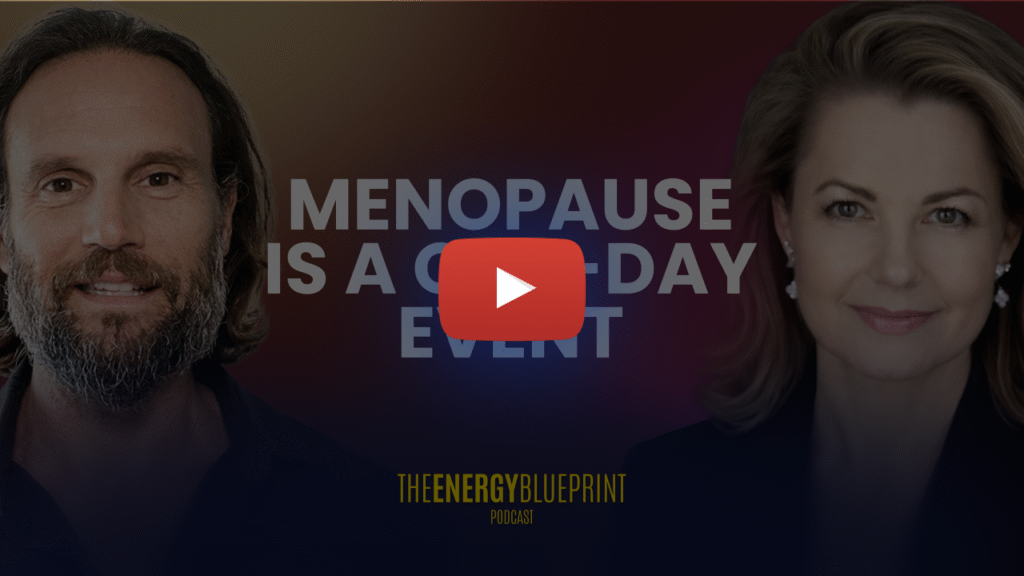
Today, I’m excited to introduce you to Zora Benhamou, a gerontologist who studies aging and has some unique ideas about menopause, based on research and her gerontology background.
In this episode, we discuss her take on menopause, including the fact that it’s technically a one-day event! 12 consecutive months without a period lead to your “meno birth date.” But perimenopause – the stage just before menopause – lasts 5 to 7 years on average (10-15 years for some women!), and that’s where the most difficult symptoms can happen.
The biggest menopause myth is that it’s a concern for older women, that it’s something you don’t need to worry about until you’re 50.
But research shows women start losing progesterone around age 35, the calming, relaxing hormone that makes you feel good. The reality is that women should ideally begin thinking about menopause decades earlier, in their 40s and 50s.
Table of Contents
In this podcast, Zora and I discuss:
- Women start losing progesterone around age 35—your calming, relaxing hormone. When it decreases, you may get sleep disruptions and anxiety, but doctors give antidepressants instead of considering hormones
- There are 103 symptoms of menopause, but most people only think about five: joint pain/”frozen shoulder” is common but rarely related to menopause
- 30% of people over 65 who have a hip fracture die within a year, and this statistic increases as you get older
- Before menopause, men’s cardiovascular disease risk is much higher than women’s, but after menopause, women lose their hormones and have a similar risk to men
- The “timing window” for hormone therapy benefits is within 10 years of menopause and before age 60
- Hormone therapy done right can completely change women’s lives, but it can also go wrong if the body’s not accepting it, not detoxing well, or the doctor didn’t get the right formula
- Some women have “progesterone intolerance”—their receptors don’t take in progesterone—they expect good sleep and less anxiety, but get worse sleep and more anxiety
- Dr. Felice Gersh believes oral progesterone may not be good for women, even though it makes them feel good. Zora offers a tip on the best way to use progesterone
- Biohacker women are often trying too hard: we explore how they can work with their bodies to experience a balanced menopausal transition
Listen or download on iTunes

Listen outside iTunes
Transcript
Ari: Hey, this is Ari. Welcome back to the Energy Blueprint Podcast. With me in today’s episode is Zora Benhamou, who is a gerontologist who studies aging and is a biohacker and is the host of the Hack My Age podcast and the owner of hackmyage.com. She is a specialist in menopause and particularly in science-backed approaches to biohacking menopause and menopause symptoms, and making the transition into menopause and through menopause as suffering-free as possible. She is a wealth of knowledge. I really enjoy this conversation, and I think you will, too. With no further ado, enjoy this conversation about biohacking menopause with Zora Benhamou. Zora, such a pleasure to have you on.
Zora Benhamou: Thanks. I’m excited for this conversation.
Gerontology vs. Geriatrics
Ari: First of all, you are a gerontologist. I would like to start with that. I want you to tell people what that means, what that is, and how that field, geroscience, gerontology, is distinct from medicine.
Zora: Yes. I am so glad you asked. You’re the first person who’s right off the bat asked me that on a podcast interview. It’s so important because people tend to think a gerontologist is a geriatric physician. I’m not a doctor. A geriatric physician is somebody who treats older adults. A gerontologist is somebody who studies aging and longevity. We don’t look only at the biological perspectives of aging.
We look at the psychological, the sociological aspects. These are all very important. Yes, we tend to focus on older adults and advocate for them and look at that research, but we have to look at the whole life course from birth until death to understand why we get diseases, how we get diseases, what’s happening here. We don’t only focus on older adults. I think it’s really critical to understand childhood experiences, what’s been happening throughout adulthood in order to decipher what is actually happening in later life. Does that make sense? It’s a short answer.
Ari: It’s a very short answer. This is something that I happen to be writing a lot about for not the book that you just mentioned you’re reading, the new red light therapy book, but for my next book that will come out about a year from now.
Zora: Which one is that? What’s the name? Do you know?
Ari: It’s top secret. I can’t talk about it yet, but I will say it relates to geroscience. I think one of the interesting things that’s going on there is that there is this enormous gap between what a geroscientist knows and what medicine practices and what the general public believes about longevity. In particular, the distinction between disease versus biological aging. Do you know what I’m getting at here?
Zora: Yes. I think so. I think so.
Biological Age vs. Chronological Age
Ari: The core, the central foundational revelation or insight that sparked the field of geroscience, really largely due to the work of Dr. Jay Olshansky, is the recognition that what is really killing us is not disease so much, but is biological aging. Biological aging is this underlying terrain underneath these specific manifestations of the chronic diseases of aging.
What medicine is uniquely focused on is combating the specific diseases, as if a major breakthrough or a cure for this or that specific disease would be the game changer that would make us live decades longer in great health. What geroscientists know is that that’s just fundamentally wrong. Most people are under a mistaken impression because they don’t understand this component that’s underneath the specific manifestations of diseases, which is this terrain of biological aging. Would you disagree with anything I said there or frame it differently than I have?
Zora: No, it’s actually a really good– There are many theories of aging, and people can argue through the moon with their theories. If people don’t understand what biological age versus chronological age, I think it’s quite important because chronological age is the number of years we’re on the planet and the number on your driver’s license. Biological age obviously is how your organs are aging, what’s happening internally. We can be much younger than our chronological age or much older. That’s why we have all these biological test kits. We can argue whether they’re accurate or not.
It is something that I think people need to be really conscious of. I really believe that biological age should be taken into consideration in the medical world when a physician is treating somebody. You can have a 65-year-old who’s got a biological age of a 45-year-old, and then you have the 62-year-old or 65-year-old who’s a 65 or even older. I think the treatments should be different based on the biological age. We’re not there yet. We’re not testing biological age. Hopefully, in the future, it will be taken into consideration.
Ari: I can’t resist delving deeper into that. I know we’re supposed to talk all about menopause here, and we will get there. I would like to go deeper in what you were just talking about first. Can you tell me a bit more about how biological age factors into that? There’s lots of different directions, as you alluded to, like how do we even measure biological age, are these tests accurate, and so on. I would love to go into that, too. Maybe we don’t have time for everything. Just tell us more about this biological age story.
Zora: There are certain treatments that say are denied people if you’re over the age of 65. I don’t think it’s fair. It’s just because you have a number. When you think about COVID, for example, as well, sometimes there’s a hierarchy. Should we treat the older person or not because they’re going to die anyways? Let’s keep the younger person alive. These are issues. They’re real issues. They’re ethical issues that are happening in medicine today. When you put a number on somebody’s treatment, just because they’re a number, rather than looking at the person as a whole, whether it’s their biological age or not, it’s a totally other story.
I think this is where, as we’re aging, and we’re aging better, I think, than we were in the past. I think 65-year-olds today are different than the 65-year-olds of a generation ago. Even though we always complain that people are getting sicker, and health spend is getting shorter, we are living longer. We are going in this trajectory where we have a group of people who are aging better. I think they really do need to have different treatments and have a different outcome. That’s why certain rules around age, I think, are wrong.
Measuring Biological Age
Ari: Okay. How do we measure biological age? What are the pros and cons, or accuracy issues with different ways of measuring it?
Zora: You can have something very simple on one of those body composition scales. They’re not accurate, but they give you a number. Then you have, up until research, we have research labs. They’ll be measuring telomeres or methylation. There’s different kits that are on the market as well. The people that I’ve interviewed in my podcast who are deep into this world, they’re not 100% accurate. They’re only looking at the biological age of a certain thing, whether it’s your glycans or methylation. It’s really hard to put this whole picture together. I still think it’s worth testing on one kit if you’re going to do one way of testing.
I don’t think it should be the body composition scale. You can’t probably afford what’s going on in a research lab. If you’re getting these at-home kits, the advice that’s been given generally is, okay, you can take these kits. One kit won’t really do very much. You’re going to get two so that you can try to make a change in your life, hopefully for the better. Then you test again. It’s the same kit in the same lab. It’ll give you a general idea. In my opinion, I don’t think that they’re very accurate either, but it’s a fun toy if you’ve got a little bit of extra cash laying around.
What is Menopause?
Ari: Yes, that’s my impression as well. Let’s talk about menopause now. In the theme of what we’ve been doing in this conversation thus far, I want to stick with first principles for a moment. Can you talk about what menopause even is? I know that sounds very basic, but I think it’s important. Maybe talk about it from a big picture evolutionary frame or from a gerontology frame. What is this phenomenon of menopause all about? Why does it exist, and what is it?
Zora: Oh, wow. Okay. Where should I start? I’ll try not to go too deep because it is, especially if you haven’t covered this yet, which I’m really grateful that you are covering menopause because, well, half the population is going to go through it if they haven’t already, and if they’re lucky to live long enough to go through this. Menopause is when basically the ovaries start to shut down, and they produce less estrogen, progesterone, testosterone. A woman’s hormones can gradually decline. There’s some that gradually decline, and there’s some that go up and down, up and down.
This is called perimenopause. Let’s start with menopause. Menopause, the technical term, is 12 consecutive months without a period. That’s when a doctor says, “Okay, that’s your meno birth date, and you are now officially post-menopause.” Menopause is a one-day event. There’s a lot of consequences that happen with the loss of our hormones and with the fluctuations in perimenopause as well. That’s why the gerontologist in me can’t help but say, “Well, we’re going to treat menopause or your menopausal symptoms. I want to look at your 80-year-old self,” and say, “What can we do today to protect our 80-year-old self?”
It’s a little bit different than, “Hey, I just want to feel better.” It’s your choice. It’s your menopause. The average age of menopause in the Western world is 51. In India, it’s 46, which is much younger. On average, a woman will have perimenopause, which is the stage just before menopause, somewhere between 5 and 7 years. Some have 10, some have 15. There’s so much variation here. The game is to understand that I think the most traumatic period, the most difficult time, is the perimenopause. Unfortunately, doctors today, they want to treat women post-menopause after you’ve had 12 consecutive months without your period.
This is a real problem because the suffering happens before. Again, not everyone suffers. 20% to 25% of the women feel nothing. Just because you don’t feel something doesn’t mean nothing’s happening under the hood. I want women to be a little bit conscious of that. The perimenopause experience, if you’re going through menopause around 50, well, then, in your 40s, is when you may start to feel some of these changes. The research shows that on average, women around the age of 35 start to lose progesterone. This is your hormone that is, you’re going to be so sad when she goes away because she is calming, she makes you feel relaxed, she makes you feel good.
When she goes, and she goes quite rapidly in mid-30s, and that’s when you may start to have sleep disruptions, or you’re feeling a bit more anxious. This is where you go to the doctor, they give you a sleeping pill or an antidepressant, not even thinking about menopause, because menopause is what? Not until your 50s. Unfortunately, this is the narrative I hear all the time from women in my community and their doctors. Just being aware of that is really important. Then, as you go through this perimenopause journey into menopause, you have these rapid fluctuations. Estrogen can rise and fall.
When you have an imbalance between the progesterone and the estrogen, this is when we start to have even more struggles. Our periods may come and go. We’re getting lost with that. We have the hot flashes. We have night sweats. We may have joint pain, which a lot of people don’t really relate to menopause. They go see their osteopath and wondering why they have a frozen shoulder. Very often, it’s a very common symptom of menopause. There’s 103 symptoms of menopause. Most of us are thinking about five of them.
If you understand menopause and the symptoms that can occur, and not everyone’s going to have all these symptoms. Some have much more frequent symptoms. Some have more intense symptoms. Some have nothing at all. Like I said, there’s a spectrum. As we’re going through this, the things that are happening under the hood, which are the silent killers, I think people need to be aware of when they go, “Oh, I didn’t go through menopause,” or, “I’m singling through it. Everything’s fine. I don’t feel anything.” We don’t feel our bones getting brittle. We don’t feel our heart getting full of plaque. We don’t feel these things under the hood.
I still encourage women to still go to a doctor, talk about menopause, and say, “Can I just look under the hood and follow my trajectory as I’m aging?” If you see you’re having bone loss, if you see that your cardiovascular markers are going in the wrong way, at least you can take action and do something about it because osteoporosis, and cardiovascular disease, and Alzheimer’s doesn’t start at 70. It starts decades before that. Everything after that menopause birthday is called post-menopause. There are a couple of stages. Also, in the perimenopause, we have early, mid, and late perimenopause. We can dive into that [crosstalk]
The Stages of Perimenopause
Ari: Tell me more about that. Let’s talk about the different stages of it.
Zora: The early stage of perimenopause generally happens late 30s, early 40s. It’s usually the progesterone that goes first. Estrogen may stay high, plenty of that still. Progesterone starts to take a dive. That’s when you start to feel the sleep disruption. A woman who knows her period, who knows her body, she knows something’s off. It may have a heavier period, a lighter period. Maybe she was a 28-day girl before, and now she’s a 25-day girl. Something’s off. It’s quite mild. It’s not totally disturbing yet. Then, in the early 40s, she may start to feel the mid-perimenopause phase.
That’s when estrogen starts to go up and down. That’s when maybe she has her first hot flash, or she starts to kick off the sheets at night. It’s not the cinematic sweat at night. Maybe some people do feel that. Even just kicking off the sheets at night, and you think, “I’m a little hot, but my partner there is cold. There’s something not quite right.” Then you see more changes in the period as well. Then you have the late perimenopause stage. That will happen in your late 40s on average. Again, this is a spectrum. That will be you may go three months without a period. You may start to feel joint pain, maybe brain fog.
You can’t remember words anymore. You may stop mid-sentence and go, “I don’t even know what I’m going to say. I completely forgot what I was going to say,” and get off track. You get worried when some of these things happen. You think you’re having early-onset dementia because it’s really frightening. Then there’s more uncommon symptoms, but still symptoms of menopause that happen in this stage, like a creepy, crawly skin, phantom smells. That’s when you smell smoke or burnt toast, and no one else does. This all just is related to the loss of estrogen in the brain.
Your brain, that’s where a lot of your sensories are for smell. You may start to get dry eyes. Everything seems to dry out when you lose your estrogen. Estrogen is an anti-inflammatory. It’s also very hydrating. It helps us bring fluid back into our joints. It helps us keep our fluids in our eyeballs. This is why we may go, “Why is my skin so dry, my hair is dry, my vagina is dry?” Sex becomes painful. Then libido goes down. Then it’s just this spiral. It’s a really difficult time for some women.
Again, I don’t want to scare anybody who’s listening to it because you can meet plenty of women who sailed through menopause and didn’t feel anything. Then there’s the woman who’s feeling everything under the sun. Just because you’re healthy, or your diet is spot on, and everything’s exercising, doesn’t mean it’s a free pass through menopause. I believe it certainly helps, and we should definitely be doing these things. The number of women I know who are doing everything right, they’re shocked when they start to have some debilitating symptoms. They thought I was going to sail through this because I do all the right things.
Longevity and Prevention After Menopause
Ari: What is the concept of longevity after menopause?
Zora: Longevity after menopause, this is where I really want women to pay attention. I’m particularly worried about the asymptomatic woman because she won’t go to the doctor, doesn’t feel like there’s any need, and she won’t look under the hood. When I mentioned earlier Alzheimer’s, cardiovascular disease, and osteoporosis, they don’t start at 70. They start in your 50s or 40s. It depends on your genetics. It depends on lifestyle. It happens so many things that if we’re at least aware, we can do something about it.
For example, if you are having the menopause symptoms, and you see that you’re starting to have bone loss, well, then it behooves you to have a conversation about hormone therapy, bioidentical preferably in my opinion, but bioidentical hormone therapy with your doctor. If the loss of estrogen is causing this bone loss, then replenishing it– This is what all doctors, they can argue to the moon about hormone therapy, but they all agree, well, it’s very, very protective and very helpful for the bones to bring that estrogen back in. If you start now, that’s great. You don’t have to deal with osteoporosis down the road.
It’s not a free pass. I was very careful when I say hormone therapy. As much as I love it, it’s not a free pass to not do the exercise and the strength training and eating well and getting good sleep and managing her stress because all of that affects bones as well. Medications that you have may affect bone loss as well. It’s looking at the picture holistically, but on the other hand, there’s plenty of women who are doing all the right things and exercising, getting the impact and doing all the protein and getting everything in, but yet they still experience bone loss.
This is a holistic approach. It’s one of the tools in the toolkit, but it is, and this is why I want women to really take advantage of this period. It’s a period, it’s a transformation, it’s a rebirth, it’s a chance to become the best version of yourself, and while you’re doing that, you are protecting your future self. You have a better chance. There’s no guarantees. I’m very cautious about this word protective that a lot of people use with hormones. It’s going to protect your bones, your heart, your brain, your vagina. It’s going to protect everything. When we say the word protective, it gives the impression that we don’t need to do anything else. I do value that.
I think it’s really great as an add-on, but I still want to encourage women to do all the other things. When you get hormones on board, if you are really symptomatic, and how you ask a woman to go to the gym and make broccoli and chicken when she’s had a terrible night, she’s been anxious, and she’s weepy, and she can’t sleep, and she has hot flashes, and she just can’t get it together. When you bring hormones, perhaps as part of the piece, then she’s more likely to maybe go to the gym because she had a good night’s sleep, and then do all the things that need to be done. I think there’s a holistic approach. Again, there’s so many tools in the toolkit that we can use in order to live our best lives as we age.
Major Health Risks and "Silent Killers"
Ari: What are the unique killers or causes of death, diseases that spring up? I know you’ve alluded to some of them here, but what are the major risks that are associated with menopause? I know this starts to get into hormone replacement versus not doing hormone replacement therapy, but let’s say in the context of not doing hormone replacement therapy, what are the major risks associated with going through menopause and the silent killers that result from that?
Zora: The big three are the cardiovascular disease, the osteoporosis, because fracture and falls and fractures are a real thing. We mean to go, “Oh, well, you fall down, you just stand up. What’s wrong?” No. It’s 30% of the people over the age of 65 who have a hip fracture, they die within a year of their fracture. This number, the statistics gets thrown around all over the place. We have to be a little bit cautious because it’s people over 65, and we may think if you have osteopenia right now at 50, you’re panicking like, “Oh my God, I’m going to die within a year if I fall and fracture my hip.”
That number increases as we get older. If you’re an 80-year-old who has a hip fracture and falls, well, obviously, you’re much more likely to die. We have to take some of these statistics to the grain of salt, but it is a real thing, and it is much easier to break your bone when they’re brittle. The other one, I would say the research is still out, and people are still debating about it, but Alzheimer’s, it affects more women than men. There’s some really interesting research coming out from Dr. Lisa Mosconi. She’s a menopause researcher, and she looks at the brain.
Our brains are full of estrogen receptors. There’s some thought that, wait, if we get estrogen on board, maybe it’s protective. Again, I still think we need research to show that, but the problem with women who are debating whether they should do hormones or not hormones, it’s like there’s a window. They call it a timing window where the most benefits happen within 10 years of menopause and before the age of 60. This is like, “Oh, no, do I do it, do I not do it?” This is where the pressure comes in, and you’re scared, and then your hormones, and hormones have had a bad rap for so many years.
If you decide not to do hormones, or if you cannot for any reason, there are so many things we can do for our brain and our hearts and our bones, and we should be doing them anyways. You can live a long, healthy life and have strong bones and have clear arteries, but everyone’s bio-individual. This is why I like this biohacking space, because we are an N-of-1 experiment. I don’t care if the research shows that 50,000 people have this great outcome with this protocol, if you don’t have a good outcome because the only person that matters in this room is you.
If you look under the hood, I love data like any biohacker does, and if you can just see your trajectories and see where you’re going without fear and without obsession, then you can take action before it’s too late. This is where the loss of our hormones, again, those are the three big ones that come up, but there’s vaginal dryness, and this has UTIs, and this can have sepsis, and it can have death. This is not as big of a concern. It is a big concern, but it doesn’t make the charts like, say, cardiovascular disease does, because we know that’s the number one killer for both men and women across the board.
I think sometimes we spend so much time worrying about breast health, which is important, but nobody’s paying attention about their cardiovascular health. We tend to associate this with an older man who has a heart attack and gripping his chest. We don’t think of the women. Women have different symptoms as well than men, and they may not get the same treatment because nobody’s really aware of those symptoms. Loss of hormones, it’s incredible what happens. If you were to look at biological age, there are some biological test kits out there, and they do these tests of women before menopause and women after menopause.
What they generally find, the men’s risk of heart attacks and cardiovascular disease is much higher than a woman’s up until menopause. When menopause happens, she loses her hormones, she’s right up there with the guys. She’s just at the same risk as men. What’s going on? That’s the loss of the hormones, and it shows you how protective they are when we had them and when we were younger. The game now is, okay, how can we still protect all our bodies in order to have a strong, healthy, happy life?
Bio-Individuality vs. General Statistics
Ari: I want to come back to what you were saying there about people being their own unique N-of-1 and tracking the data. There’s something that overlays onto that, which is being proactive versus reactive. Looking at your data and saying, “Oh, I have elevated LDL and APOB, and therefore, I’m at risk for heart disease, and therefore, based on my increased risk, I need to do XYZ, take a statin,” or et cetera, versus in a more proactive approach, you might be looking less at individual data and individual risks and more at universals.
Probabilistically speaking, we know that on average, women who go through menopause and do hormone replacement therapy are at XYZ reduced risk of this or that problem versus women who don’t do hormone replacement therapy or women who do bioidentical hormones versus non-bioidenticals. I know that data’s pretty thin right now. We need more data. I’m just trying to give examples of the principles of how you would overlay being more proactive and basing more of your strategies based on universals and statistical probabilities versus your own individual data, and saying–
Part of what I’m getting at here is I think it can be taken to an extreme to say, “Well, I’m a unique individual, and I’m biochemically unique, and therefore, I’m very different from everybody else, and therefore, I can only respond and base my decisions based on my unique data.” What ends up happening as a result of that, in large part, is to be very reactive instead of proactive. I think it overlays on this proactive versus reactive type of matrix. I’m curious what you think of that.
Zora: There’s a happy medium, right? I think when we think of biohacking, we can over-biohack things as well and think we’re a hero, or we’re going to chest this out. Biohackers do take a lot of risk in some things that may be used off-label, and sometimes they work, and sometimes they don’t work.
Ari: Can I add one thing on that point?
Zora: Sure.
Ari: Sorry to interrupt. I think what you said there is really important. I think there’s another element to that, which is humans, I think, as a generalization, are very bad at understanding magnitude of risk or magnitude of risk reduction in terms of statistics. Oftentimes, I see people, especially in the biohacking community, obsessing over data or trying to optimize biomarkers that have minuscule impacts on mortality and disease risk, and imagining that they reduced XYZ biomarker by 10%, now they’re in the normal range instead of slightly abnormal, and they imagine this has this really big impact on their longevity.
If you actually were to look at the evidence base for that, there would be, in many cases, no real evidence to support that lowering that biomarker or raising it by this percentage really has any relationship to longevity or all-cause mortality at all.
Zora: Yes, absolutely. I think you’re absolutely right. There’s a happy medium between the two. If something’s not working for us, why repeat and do the same thing and expect a different result? It just would be madness, right? We can’t ignore because I think the data, the research shows, okay, the probabilities are pretty high if you do this X, Y, and Z, so you try it. That’s why I say, “Well, if it doesn’t work, it’s okay.”
Now, you’re talking about another extreme where you say, “I don’t care what the data says, I’m totally different, and I want to do it my way,” well, then you take a risk. Then it’s your body, your risk. Now, whether the outcome is what you want, well, we will see. Taking charge of your health, I think, is part of the thing in. The world that I live in, it seems everybody’s putting all of their faith in the doctor. The doctor is there to help you, but he doesn’t know everything.
You have to help the doctor help you, and just saying, “I don’t know, do whatever,” that’s– Again, it’s your choice, that’s fine, but then don’t complain if you’re not advocating for yourself and doing a little bit more of the research yourself or trying to figure things out, is this going to work or not work, what are my alternatives, then it is, who knows what the outcome is. The extra step will be quite helpful, I think, but without going completely to the other side, I think that’s the problem.
Hormone Replacement Therapy (HRT) Overview
Ari: Yes, agreed. We’ve been circling around this for most of this conversation, but hormone replacement, I think this is the elephant in the room when it comes to menopause. I’d love to get your thoughts on it. Do you think it should be done by everyone? Do you think it should be done only in certain contexts, bioidentical versus non-bioidentical? Tell me everything.
Zora: Oh, wow. Okay. There’s so many opinions running out there on social media, in the news, in the press, in podcasts, and this is where I try to help women navigate the noise. What do I do? Because you can hear the good, the bad, the ugly. It depends who you listen to, what you do, and this is where doing your own research and just reading more, learning more, will help guide you to figure out if this is something right for you or not. I think no one should ever be bullied into taking it. I don’t think anybody should be not spoken to about it or understand the risks versus the benefits because there’s so much out there.
I think hormone therapy done right is amazing. I’ve seen women’s lives completely changed, and they start doing all the other things that they know they should be doing. Then I’ve seen it also go really wrong because the body’s just not accepting it, maybe she’s not detoxing it well, maybe the doctor didn’t get the right formula or the right thing, and it’s a no-go. I don’t think every woman should be on it. It’s an option. Most women are candidates for it. It’s a discussion, and it’s so individual because you have to look at your family history, your personal risks, what your lifestyle is, how your liver is detoxing. So many things need to be considered.
Unfortunately, doctors are not trained in menopause. They’re not trained in how to treat a woman through menopause with hormones. It’s kind of the Wild West right now, and this is where it’s really difficult for women right now to navigate. It’s better than I think it was for the generation before us because those women were shut down completely saying estrogen causes cancer, which has been debunked, and that’s not true at all. It’s a whole other story when that happened. Now, the research is coming out. Oops, we were wrong.
Actually, it could be very good for a woman who’s really struggling with the symptoms as well. Maybe if she’s asymptomatic, and she’s worried about her bones, then it may be protective, too. It should be a discussion, and it should be an informed decision-making with your doctor or whoever’s prescribing you this. If it doesn’t sit right with you, if your intuition, I always trust a woman’s intuition, if it doesn’t feel right, don’t do it. We can do so many other things without the hormones, too.
Just to know that women– I just want them to know they have options. It could be really great, or maybe it’s not something for you at all. Then, when you talk about what kind, we have gels, creams, sprays, troches, oral, injections, pellets, the list goes on and on in terms of choices. If you really are convinced like, “I need help, and I need to get something,” and that cream is just not working for you, well, then there may be a patch, and maybe you need to go up to injections. There are options. Don’t just shut something down.
HRT Delivery Methods
Ari: Sorry, I didn’t mean to interrupt your last thought there. I was just curious if you have any thoughts on optimal or less optimal methods of delivery.
Zora: Oh, these are good questions. You will see, again, so many people arguing this is the best, this is the best. The best one is the one that works for you, that brings you relief. That point made is the most important because I’ve seen women on the patch, and it’s a patch. It’s literally like a sticker you’re putting on your belly for three days, and then you change it, and that’s it. It’s so simple. I’m always fascinated like how is it that these hormones can go through a sticker on your body? It does, and women love it. Then there are women who are not absorbing it.
It’s a transdermal. Their skin is just not absorbing it, they’re not penetrating it, and so they need to go on to maybe a gel, or maybe they need to do oral or whatever it is that they need. We do have options. I think the best one is the one that works for you. There are people out there who would argue that say, “No, the best one is injections. That’s the one that gets through the best.” Maybe there’s research supporting that, and that’s fine. If you don’t want to inject yourself, then don’t do it. We have other options. We have sprays, we have other things.
In general, I would say the bioidentical is the bioidentical versus a synthetic. It sounds like, oh, good, bad, and I don’t like to demonize anything. There are some women who need to take the synthetic, and it works for them, and that’s fine, too. As long as you’re getting relief, and you’re getting the support you need is okay. The difference is the bioidentical, if you look at it under a microscope, it’s exactly the same structure as our body. Some people call it body identical. Our body recognizes it. “Okay, I’ve seen this before. Let’s utilize it.”
Whereas a synthetic one, generally, this would come from conjugated equine estrogen, which is horse urine, and people get grossed out with that. There’s worse things in life, but if it helps you, the problem with that, there’s also some other estrogens, there’s other chemicals. There’s things in a horse’s urine that we probably don’t need anyway. It’s not the ideal option. Plus, an oral estrogen tends to increase the risk of heart attack, stroke, and blood clotting. It’s not the first choice for a doctor who’s been through a menopause training because you don’t want to put that person at risk.
Again, it’s a small risk, but still, especially if the person has a history of blood clot, you don’t really want to give her that. Why do that and why worry about it if you have a transdermal option? Then we take her to the transdermal. Let’s see which one works. Then on our way, we’d still monitor her heart health, but that risk is gone. That’s why we prefer bioidentical, or we prefer if it’s estrogen. We prefer not to take it orally, but if you have to, then you can. You take the oral estrogen, and you monitor your heart health, and you make sure that you’re not going in the wrong direction. That make sense?
Ari: Yes, absolutely. My wife recently started hormone replacement therapy, and I remember reading a bit on the oral versus transdermal and the heart disease risk. I could very well be wrong because I didn’t spend more than a few hours on this. My understanding was that the latest is that it’s still somewhat controversial, that there’s mixed evidence, whether it does or doesn’t increase risk.
Zora: There are different types of oral estrogen, too. It depends which one are you talking about. The research is still lacking on which one is better, like you said, bioidentical versus synthetic. There is some research, but it’s not enough for everybody to make a conclusion, say, “Yes, we all agree on this.” I think hopefully, for the next generation, things will be a lot clearer. Until then, you have to make your decision, am I going to dip my toes in this or not?
Anyone who’s listening now who’s on the fence and really is thinking, “I really do, but I’m not really sure,” well, you can try, and you can stop. It’s not like you have to wean yourself off. Hormones usually have to be taken every day if it’s a cream. The best place to start is a cream or a gel, because then you can play around with it and give more or less of a dosage. If you don’t respond well, you just stop. You have to take a hormone every day because it goes out of your system so fast. It’s like six hours and gone.
Sometimes that’s what we have to do at evening and morning. It’s don’t have to worry about this huge risk that you’re taking. Your doctor, hopefully, if he’s a good one, then he or she will guide you on how to titrate and what dosage, and if that’s not working. You stay really in close contact with your practitioner when you are starting hormones so that you can tell them, “Look, I feel worse,” or, “I feel nothing,” or, “I feel great,” whatever it is. You need to have that guidance. Don’t wait three months suffering until your next appointment.
Lifestyle Biohacks for Menopause
Ari: Apart from hormone replacement therapy, what are your top biohacks for dealing with menopause, menopause symptoms?
Zora: Oof. The menopause symptoms, well, the most effective for hot flashes is the hormone therapy. You don’t need a lot. It nips it in the bud quite easily. For most women, it’s pretty safe. The hormone therapy is one of the top choices. Again, if you want to be on this the rest of your life, fine. If you don’t, that’s okay, too. The next one, I would say, is the foundation, the stuff that we all know in terms of diet and exercise, because this has an impact on your– Again, there’s 102 symptoms that we’re talking about. Are we talking about joint pain? Well, yes, exercise is good, but obviously, not the kind that’s going to make your joints even worse.
I always say motion is lotion. We need to move in order to get the blood circulating. The joints need that movement. However, if you’re injured, which is, as we’re aging, unfortunately, we have so many things happening to us, even if we’re doing all the right things. It’s always that balance. I have to say exercise is one of my top choices for the weight gain, for the insulin resistance that happens, for the sleep, for the stress, anxiety, the mood. We have enough research showing how impactful that is, whether you’re in menopause or not on menopause, but when you’re using these tools through the menopause transition, it can be very helpful.
The problem that I see sometimes in my community is– I tend to attract the biohackers. They’re optimizers. They want to get the next level. I find that these women are trying a little too hard. They’re pushing the gas all the time, and they’re lifting very heavy because they’re worried about their future self because I talk about that, and everybody else is talking about building muscle. However, they’re doing that. They tend to eat less because they’re trying to lose weight. They’re training hard. They’re eating less. They’re very stressed out, and their cortisol is through the roof.
It’s hanging very high. It never has a chance to come down. That’s storing more belly fat, and that’s already a problem in a menopause. These women, I tell them, “Don’t step on the gas so hard. We can worry about your muscles later.” Right now, when I pull them off, exercise less and eat more, they get to a better place. Their nervous system calms down, and their body’s able to finally do what it needs to do. As much as I beat the drum on all these things that we have to do, I do see it backfiring.
Nutrition for Menopause
Ari: Are there any nutritional tips that are extraordinarily helpful with menopause? Is there any specific food, any specific supplement that has really unique proven benefits in the context of menopause symptoms?
Zora: Oh, yes. When you say menopause symptoms, it’s such a big word. I’m thinking about the many, many different ones, but we’re going to talk about the top ones. Nutrition, I’ve seen– I’m a recovering nomad, and I’ve lived in eight countries and speak seven languages. I stop women in the street, literally asking them five questions about menopause, make them into reels. I’ve seen all kinds of women thriving on all kinds of diets. I’m diet-agnostic. I say, find out what works for you.
Now, if you are in the insulin-resistant category, which that happens with the loss of our hormones, women tend to become more insulin-resistant, then we need to be a little bit more mindful of the sugars that we’re taking in our body. Again, that’s very individual approach. However, what I am seeing in the community, and there is research supporting this, is soy and soy products. I know it’s controversial, and people, GMO-free, you got to buy, and organic and all this stuff. That’s fine. Do what you need to do. It’s the soy that’s actually helping with the hot flash. It’s helping women feel better. Some women are adding soy milk to their coffee, and some women are eating edamame.
When I say soy, I the way they eat it in Japan and in China, we’re eating the whole bean, or we’re not making soy burgers and soy hot dogs and all these processed foods. Just getting the soy is good enough. That’s been really, really helpful. Another thing I didn’t mention is hydration. I think women need to really make sure that they’re well hydrated as well. That’s very helpful. All our cells need the water. If you talk about a supplement, magnesium is quite popular in this community because it helps relax the muscles, it helps them sleep, it helps them with just better digestion. It’s easy to access, it’s not very expensive, and it is quite magical in many ways.
Supplements: Evening Primrose & Wild Yam
Ari: What about evening primrose oil?
Zora: Yes. If you go to a pharmacy or online anywhere, if you look at these menopause blends, you will see things that have the evening primrose, and it will have [unintelligible 00:47:15], or it’ll have rosemary. There’s [inaudible 00:47:18]
Ari: Wild yam.
Zora: What?
Ari: Wild yam as well.
Zora: Wild yam is to make progesterone as well, and that’s calming. It’s a hit and miss. When it comes to menopause, all these ingredients, you can find research supporting it and research debunking it. Then, when I see in my community, it is a hit and miss. Some women love these blends, will say, “Evening primrose has helped me so much,” and other ones will be like, “I don’t know, I tried it.”
It’s nothing to do, I don’t think it’s like they bought a bad product or anything. It’s just some of us respond to these things, and some of they don’t. It’s quite an easy thing to do. It’s easy to access. You don’t need a doctor. Obviously, you always talk to your doctor before taking supplements because we don’t know what conditions you have, but you don’t need a prescription for it in general.
Women can experiment quite easily with that. I don’t want to poo-poo anything. If it works, that’s fabulous, and keep going because I’ve met women around the world. I don’t even know what their secret blend is, but most of the time when I’m in Asia, it’s some herb or plant, and they can never explain what it is. I do remember one was telling me about evening primrose as well. It was in Vietnam. She seemed to like that.
Ari: I think it’s interesting how many areas of science that we would assume are extremely well studied and turn out not to be when you actually look. If I was to put a number on it, I’d say our overall understanding at this point in time about human physiology, about human health, maybe we understand 10%, 20% of the overall picture. That’s what I would say.
I’d be curious if you argue against that. One area that struck me, even something as simple as hormone replacement therapy, there’s so much research that we still need to do to understand how that affects menopause. Bioidentical versus non-bioidentical, there’s very little in the way of research on that. These different methods of application, transdermal versus oral, we need more research there.
The Mystery of Progesterone
One of the even more basic areas that I think is shockingly little understood is progesterone and just the hormone itself and what it does and why it’s important.
I’ve been struck in some of my conversations with people on this subject and people who specialize in this area that progesterone, which has been known to science for a very long time, is still poorly understood, as I understand it. I’m curious, would you disagree with that? How would you conceptualize the role of progesterone? Everybody seems to say it’s really important, but when you get to the mechanisms, and how it works, and why it works, that’s where it seems to break down.
Zora: You are absolutely right. You do more research than I think anyone I know. [laughs] I know what you do. I’ve seen some of the stuff you do. Menopause is understudied. Estrogen is understudied. Progesterone, even less. Testosterone, even less. Testosterone for women. There’s still so much to do. We will never have another study like the Women’s Health Initiative again. It was so expensive. No one will spend that kind of money. That’s what we have to do with what we have now. Progesterone, for sure. I’ve interviewed Carol Peterson, who’s the queen of progesterone.
If you ever want to learn about progesterone, she’s just such a great interview. What she’s finding in her community, she’s a big progesterone fan. She’s giving very high dosages of progesterone to some women because she sees the role that it’s playing that’s really helping. However, we have something called progesterone intolerance. There are women who are waiting for all the lovely benefits of good sleep, and more relaxed and less anxiety, and their sleep is worse. They’re more anxious, and they’re having the opposite effect. Their receptors are just not taken in this progesterone. There we go. We can’t explain this completely.
I see it in the community. It sounds like a miracle, and it can be for a lot of women, but why are there so many women who are not responding to it, and they feel worse? That’s because a lot of it works on the brain. It’s a gap of receptors, and then it helps you get a little drowsy. Some women wake up drowsy and in a fog because they don’t respond well to it, or they’re taking too high of a dosage, or it’s out of balance with estrogen. It could be many reasons why you’re not. Dr. Felice Gersh is somebody I learn a lot about menopause from, and she talks a lot about this.
She says there’s just emerging studies showing that maybe oral progesterone is not good for us, even though we feel good. We’re sedating the brain. Her theory is that this maybe is not a good thing. She’s now recommending her patients to take that oral progesterone and use it vaginally or rectally. They won’t get those benefits or those negative side effects if they’re having them from progesterone if you’re using it vaginally. It’s because of the metabolites that are happening as it goes through the liver when you’re taking it orally.
Again, what she does is like, this is just coming out now. I don’t have research to prove that this is a better way to do it, but I’m not going to wait because my women need help. We have to do something. This is what she’s saying in her clinic. It’s always great to interview practicing menopause doctors who’ve been practicing for 30, 40 years, because they’ve seen so much, and they’ve had a lot of experimentation with their patients and seeing it. It’s very, very valuable information. There’s clinical experiences. If we don’t have the research, we got to rely on clinical experience.
Menopause Myths
Ari: That’s fascinating. I didn’t know that. I know Felice, Dr. Gersh. I know her personally. She’s absolutely lovely and brilliant lady, but I didn’t know her take on progesterone. That’s really fascinating. What else comes to mind as something that’s important for listeners that we haven’t touched on? Maybe what are some myths about menopause that you’d like to see debunked?
Zora: Oh, that it’s for older women. [chuckles] I will worry about that when I’m 50. I was like that. I didn’t know what perimenopause was when I was going through. I’m 55 now. I wish I knew. I really was like, “I am not going to even think about it until I’m after 50.” That was so wrong. If I knew, and I think a lot of women– This is why I’m talking to the 35-year-olds who are like, “What?” It’s not that, oh, you’re an old lady or your menopause is coming. It’s just to look at the hormones. Check your hormones. I love testing it. I know it’s a moment, a snapshot in time, but there’s other ways you can test.
You can see where are you when you’ve got all your hormones interacting great. Maybe it’s normal for you to have low estrogen. Maybe it’s normal for you to have high progesterone. I don’t know, but at least you know what’s normal for you that when you go through that transition, you’re like, “Oh, okay.” It makes things a little easier for the doctor to interpret if you know where you’re at. You may go into a doctor’s office at 35 with anxiety, and maybe it is anxiety, but maybe it’s just a progesterone dip. Maybe just a little progesterone cream or something that you just would use once in a while would help you through much better than an antidepressant with a lot of side effects.
Just to be aware, that’s one of the biggest myths. The other one, I think, is that just because you don’t feel it doesn’t mean nothing’s happening. This is where I said I was worried about the asymptomatic woman, because she won’t look at her health until something happens. Again, you don’t feel your bones getting brittle or your heart getting full of disease. That’s one of the other myths. The other myth is that hormone therapy causes cancer, and that’s definitely been debunked.
Ari: Zora, I really enjoyed this conversation. It was a delight. Is there anything else that you think listeners need to know about this topic before we wrap up?
Zora: One, I think, please talk to somebody about menopause if you’re struggling alone. I’ve interviewed women who nearly killed themselves. They had major depression related to menopause. If you don’t talk about it, you won’t find solutions. Again, it’s educating yourself as well. When you talk about it, you’re normalizing the conversation. We were like this, if you remember periods not too long ago where nobody would talk about a period. It was so embarrassing.
I want women to talk about menopause. Talk to your friends, talk to your doctor, talk to anybody, especially if you’re struggling, and get the help that you need, whatever that may be. If you read books, if you listen to podcasts, and I know you’ll be confused, and that’s why I’m here to help you clear the confusion, help you make a decision for yourself. Just listen to yourself. You will come to conclusions on what is the best way for you to navigate your journey through menopause.
Ari: Zora, tell listeners where to find you, where they can follow your work, get in touch with you, work with you, whatever you want to tell them.
Zora: Oh, hackmyage.com. Everything is there. It’s my website. I’ve got Instagram and Facebook, and I’ve got menopause support communities, menopause quiz, free information, downloads, and guides, and things like that. You’re not alone. Reach out to me. I’m still very accessible on social media. I don’t want you to go through this alone. I will guide you in the right place wherever you are around the world. I deal with women in all countries of the world, and not just the US or North America. You’re definitely not alone. Please reach out to me on hackmyage.com.
Ari: Awesome. Zora, thank you so much for your time. I really enjoyed this. Have a lovely rest of your day.
Zora: Thank you. Thank you for having me. I’m so glad that we got a chance to talk about menopause.
Ari: Me too.
Show Notes
00:00- Intro
00:23 – Guiest Intro – Zora Benhamou
01:20 – Gerontology vs. Geriatrics
03:38 – Biological Age vs. Chronological Age
06:06 – Measuring Biological Age
09:41 – What is Menopause?
15:27 – The Stages of Perimenopause
18:49 – Longevity and Prevention After Menopause
22:09 – Major Health Risks and “Silent Killers”
27:24 – Bio-Individuality vs. General Statistics
32:40 – Hormone Replacement Therapy (HRT) Overview
36:16 – HRT Delivery Methods
41:56 – Lifestyle Biohacks for Menopause
44:49 – Nutrition for Menopause
47:18 – Supplements: Evening Primrose & Wild Yam
50:06 – The Mystery of Progesterone*
54:04 – Menopause Myths
Links
Connect with Zora: Visit hackmyage.com to take her menopause quiz and join her support communities!
Recommended Podcasts